

Pursuing a Hobbs Spinal Cord Injury Claim When Negligence Causes Paralysis
How to Protect a Hobbs Spinal Cord Injury Claim
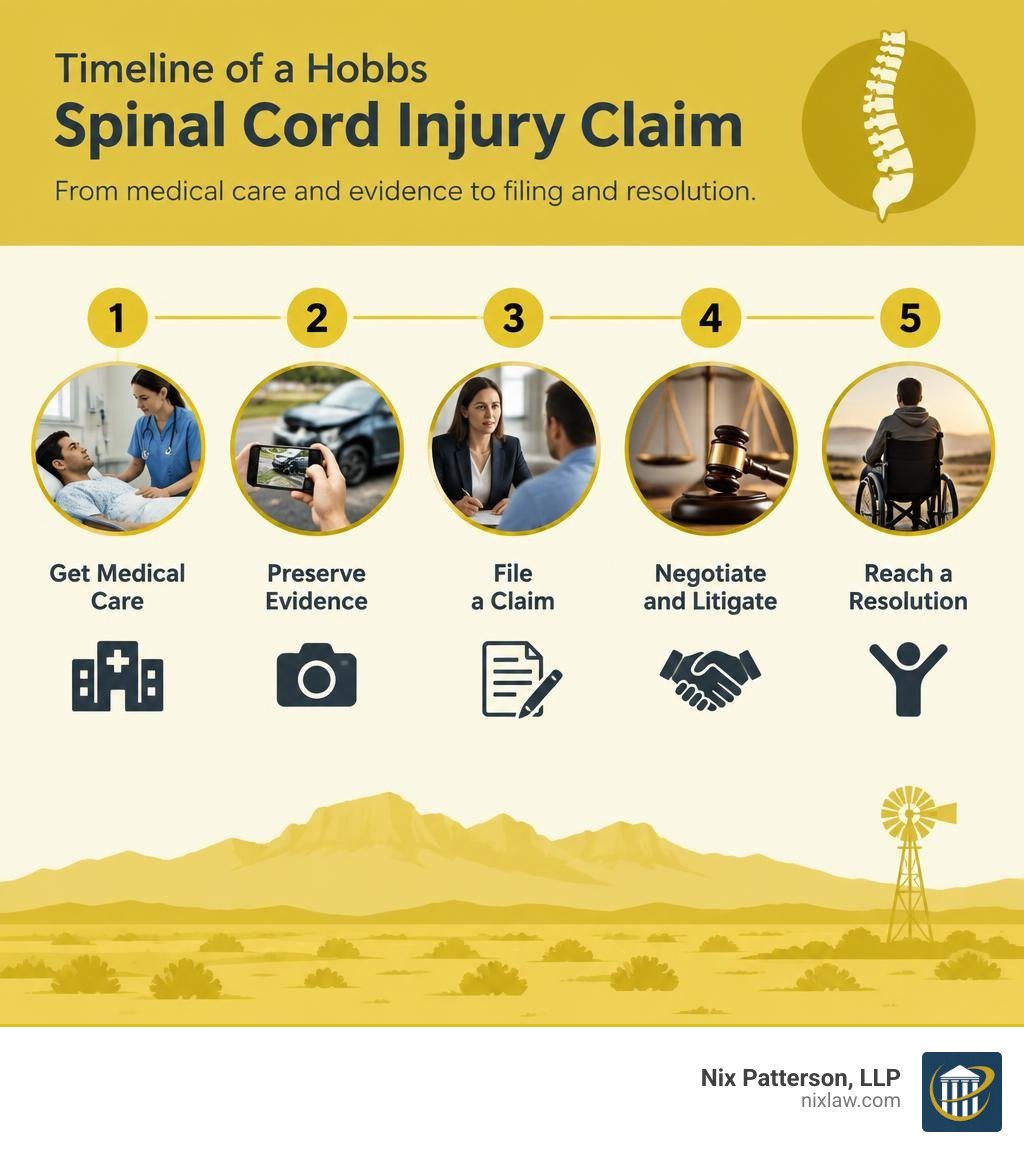
If someone else’s negligence caused your spinal cord injury in Hobbs, get medical care, preserve evidence, and speak with a lawyer as soon as you can. A claim may cover medical care, future support, lost income, and the harm the injury has caused to your daily life. In New Mexico, the usual deadline to file a personal injury lawsuit is three years, but some claims have shorter deadlines.
Paralysis can change what you need at home, at work, and over a lifetime. This guide explains how to prove fault, document those needs, and protect your claim while you focus on recovery.
Handy Hobbs spinal cord injury claim terms:
- Hobbs brain injury lawsuit
Understanding Spinal Cord Injuries vs. Routine Back Injuries
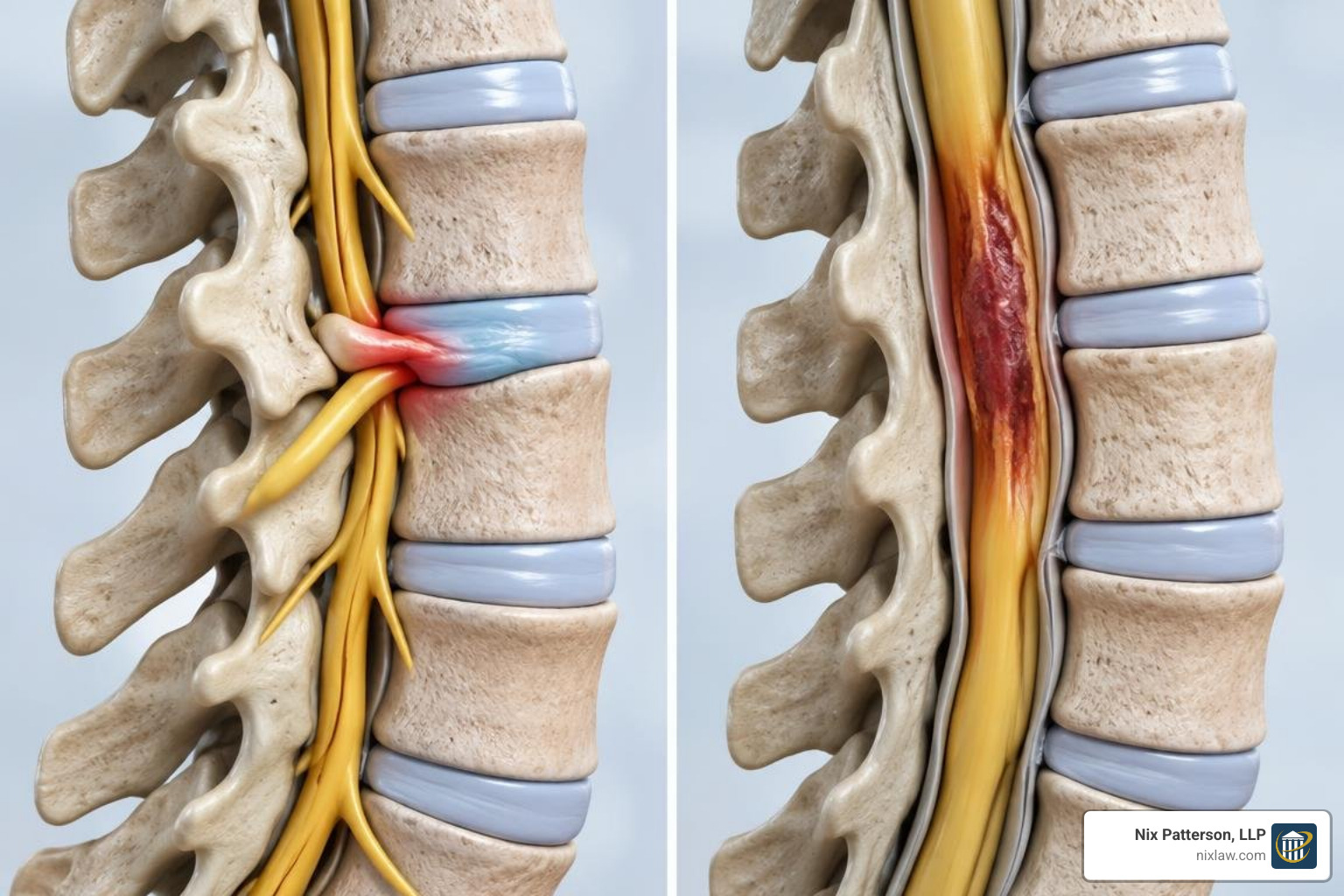
When an accident happens, people often use the terms “back injury” and “spinal cord injury” interchangeably. In medicine and the law, they are worlds apart.
A routine back injury generally involves mechanical damage to the structural framework supporting your torso: muscles, ligaments, tendons, or spinal discs. A strained lumbar muscle or a mild bulging disc can cause intense, agonizing pain. However, these issues rarely disrupt the underlying neurological pathways that control involuntary bodily functions or physical mobility.
In contrast, a spinal cord injury involves actual trauma to the bundle of nerves that makes up the central nervous system within the spinal canal. The spinal cord acts as the communication superhighway between your brain and your body. When those nerve fibers are crushed, severed, or deprived of blood flow, signals stop traveling across the trauma site. This disruption causes neurological deficits, loss of sensation, and paralysis.
Clinicians evaluate the severity of neurological damage using the American Spinal Injury Association (ASIA) Impairment Scale, categorizing trauma into two primary types:
- Complete Spinal Cord Injury: The spinal cord cannot transmit signals below the level of the injury. This results in a total loss of both motor function (movement) and sensory function (feeling).
- Incomplete Spinal Cord Injury: Some neural pathways remain intact across the damaged area. A person may retain partial movement, faint sensations, or varying degrees of physical control below the injury site.
The location of the lesion along the spinal column determines the functional outcome:
- Tetraplegia (Quadriplegia): Damage occurring within the cervical spine (the neck) impairs movement and sensation across all four limbs as well as the torso and pelvic organs.
- Paraplegia: Damage occurring within the thoracic, lumbar, or sacral spine spares arm function but impairs mobility and sensation in the lower trunk, legs, and pelvic region.
| Feature | Routine Back Injury (Strain / Mild Disc Damage) | Catastrophic Spinal Cord Injury |
|---|---|---|
| Primary Anatomy Affected | Tendons, muscles, facet joints, outer disc wall | Central nervous system nerve fibers, spinal tract |
| Primary Symptoms | Localized pain, stiffness, limited range of motion | Loss of voluntary movement, sensory loss, paralysis |
| Systemic Complications | Minimal to none | Autonomic dysreflexia, respiratory and bowel issues |
| Typical Medical Course | Physical therapy, rest, medication, routine surgery | Emergency stabilization, long-term rehab, assistive tech |
| Long-Term Impact | Manageable discomfort or resolved within months | Permanent lifestyle changes, ongoing attendant care |
Common Causes of Catastrophic Spinal Injuries in Lea County
Lea County sits in the heart of the bustling Permian Basin. While industrial activity drives the local economy, it also introduces serious hazards on the roads and at work sites. In Hobbs and surrounding areas, catastrophic spinal trauma often stems from high-impact environments:
- Commercial Trucking Collisions: Major thoroughfares like US-62/180 carry heavy volumes of semi-trucks, water haulers, and sand haulers serving oil fields. Collisions involving large commercial vehicles subject passenger cars to extreme forces, frequently causing severe spinal trauma.
- Permian Basin Oilfield Incidents: Drilling rigs, extraction operations, and processing sites involve heavy machinery and elevated catwalks. Pipe slips, equipment malfunctions, structural collapses, and falls from heights can crush the spinal column.
- Industrial and Construction Negligence: Improperly maintained scaffolding, lack of fall-protection gear, or poorly operated cranes and forklifts on job sites can cause life-altering falls and impact trauma.
- Medical Malpractice: While less frequent than vehicular trauma, surgical errors during spinal procedures, mismanaged anesthesia, or a failure to diagnose spinal abscesses and hematomas can permanently damage nerve tissue.

Legal Elements Required to Prove a Hobbs Spinal Cord Injury Claim

Filing a personal injury claim requires establishing actionable negligence under New Mexico law. To hold a defendant liable, an injured plaintiff must satisfy four foundational legal elements:
- Duty of Care: The defendant owed a legal obligation to act with reasonable care. For instance, commercial motor carriers must follow federal safety regulations, and oilfield operators must provide safe working conditions.
- Breach of Duty: The defendant failed to uphold that standard through an unsafe act or omission (e.g., driver fatigue, speeding, improper vehicle maintenance, or bypassing safety protocols).
- Proximate Causation: The defendant’s breach directly caused the accident and resulting spinal cord trauma, rather than an unrelated incident.
- Damages: The victim sustained compensable harm, including financial losses, physical limitations, and emotional distress.
Under New Mexico’s pure comparative fault system, an injured individual can recover compensation even if they share some responsibility for the incident. The total recovery is reduced proportionately by their percentage of fault. For example, if a court assigns 20% of fault to the plaintiff and 80% to a reckless commercial driver, the plaintiff’s assessed damages would be reduced by 20%.
Under NMSA 1978 Section 37-1-4, the general statute of limitations for personal injury lawsuits in New Mexico is three years from the date of the injury. Failing to file before the statutory window closes permanently extinguishes your legal right to pursue compensation in court.
Establishing legal liability in catastrophic claims requires thorough examination of the duty of care and how injuries developed, a principle reflected in cases like Hobbs v. Alabama Power Co., Supreme Court of Alabama, 2000.
How Preexisting Conditions Affect a Hobbs Spinal Cord Injury Claim
Insurance adjusters often attempt to reduce payouts by pointing to an injured person’s medical history. If an MRI reveals degenerative disc disease or spinal stenosis that existed before the accident, insurers may argue that your paralysis stems from aging rather than their policyholder’s conduct.
Under New Mexico personal injury law, the “eggshell skull rule” protects injured victims. This legal doctrine states that a defendant must take the plaintiff as they find them. A tortfeasor cannot escape liability simply because a preexisting spinal weakness made the victim more vulnerable to severe injury than an average person.
When an accident aggravates, accelerates, or activates an asymptomatic spinal condition, the defendant remains liable for the resulting physical worsening and related losses. Overcoming preexisting condition defenses requires meticulous medical record analysis and testimony from treating physicians. These records help demonstrate the clear contrast between your functional abilities before the crash and your condition after it.
Reviewing imaging timelines is critical in distinguishing new, traumatic nerve lesions from prior degenerative disc issues, as illustrated in Danny D. Hobbs v. W. Va. Office of Insurance Commissioner/Simmons Fork Mining, West Virginia Supreme Court, 2014.
How Insurers Defend Against Catastrophic Injury Lawsuits
Because catastrophic spinal claims involve significant financial exposure, insurance carriers use aggressive strategies to limit payouts:
- Contesting Liability: Shifting blame to other drivers, third-party contractors, or the injured person to reduce their payout under comparative fault rules.
- Preexisting Degeneration Defenses: Labeling traumatic spinal cord lesions as natural, age-related wear and tear.
- Independent Medical Examinations (IMEs): Hiring defense-friendly medical examiners to downplay the severity of the injury, argue against surgery, or dispute the need for long-term care.
- Surveillance Tactics: Using private investigators to record claimants, hoping to capture daily activities out of context to argue the injury is exaggerated.
- Premature Lowball Settlements: Offering early, lump-sum settlements before the full scope of future medical and care needs is established, aiming to close the claim for less than its long-term cost.
Calculating Compensation and Lifetime Care Costs
A spinal cord injury often brings substantial long-term financial costs. According to national health data, the average lifetime cost of living with a serious spinal cord injury can easily exceed several million dollars, depending on the victim’s age at injury and the level of paralysis.
Building a complete financial assessment requires working alongside life care planners, vocational consultants, and economic analysts to document all relevant damages:
- Past and Future Medical Expenses: Emergency surgeries, intensive care stays, inpatient rehabilitation, follow-up procedures, prescription medications, and routine doctor visits.
- Mobility Equipment: Power wheelchairs, customized manual chairs, backup mobility devices, ceiling track lifts, and shower chairs.
- Accessible Home Modifications: Installing wheelchair ramps, widening doorways, remodeling bathrooms with roll-in showers, lowering countertops, and adding environmental control units.
- Lost Wages and Diminished Earning Capacity: Compensation for income lost during recovery and the loss of future earning potential over your working life.
- Attendant and Nursing Care: Costs associated with home health aides for daily living activities, hygiene, bowel and bladder programs, and wound management.
- Noneconomic Damages: Physical pain, mental anguish, loss of enjoyment of life, emotional distress, and loss of consortium for affected spouses.
- Punitive Damages: In cases involving gross negligence, willful misconduct, or reckless actions (such as an oilfield company consciously bypassing critical safety standards), punitive damages may be pursued to hold the wrongdoer accountable.
Long-Term Damages in a Hobbs Spinal Cord Injury Claim
The true cost of paralysis extends far beyond the initial hospital discharge. Secondary medical complications frequently arise over the course of a lifetime, requiring ongoing medical attention and preventative care:
- Respiratory Complications: Individuals with high-level spinal cord injuries often face reduced lung capacity, leaving them vulnerable to pneumonia and requiring assisted ventilation or coughing devices.
- Pressure Ulcers and Skin Breakdown: Impaired sensation makes skin susceptible to pressure sores. Without dedicated turning schedules, pressure-relieving mattresses, and wheelchair cushions, these can progress into life-threatening infections.
- Autonomic Dysreflexia: A sudden, potentially fatal spike in blood pressure triggered by sensory stimuli below the injury level, requiring immediate medical intervention.
- Adaptive Transportation: Specially modified vans equipped with wheelchair lifts, hand controls, and secure restraint systems, which require replacement every few years.
- Vocational and Psychological Support: Ongoing physical, occupational, and psychological therapy to help victims and families adjust to major lifestyle changes.
Contingency Fee Arrangements in Complex Litigation
Pursuing a complex, catastrophic injury lawsuit requires significant financial resources to manage investigations, accident reconstructions, medical expert testimony, and trial preparation.
Catastrophic injury cases are typically handled under a contingency fee agreement. Under this structure:
- You pay no upfront retainers or out-of-pocket legal expenses.
- Case development costs, including hiring medical authorities and economic experts, are advanced on your behalf.
- Legal fees are collected only as an agreed-upon percentage of the compensation recovered through a negotiated settlement or courtroom verdict. If no recovery is secured, you owe no attorney fees.
Critical Steps to Take Following a Catastrophic Spinal Injury
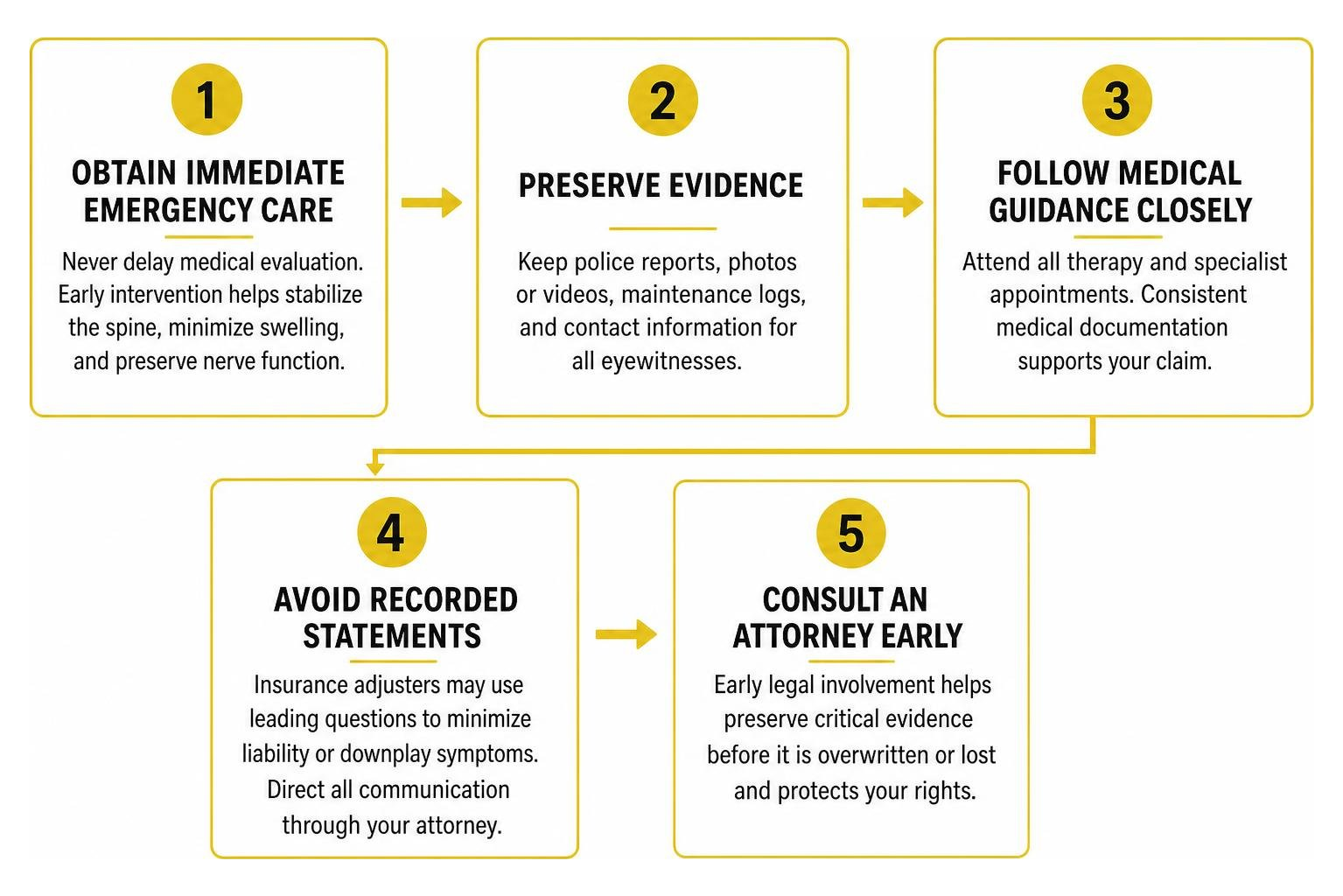
Taking informed steps after an accident helps protect your health, your family, and any future legal claim:
- Obtain Immediate Emergency Care: Never delay medical evaluation. Early intervention by trauma surgeons and neurologists helps stabilize the spine, minimize secondary swelling, and preserve healthy nerve tissue.
- Preserve Physical and Digital Evidence: Keep police crash reports, photos or videos of the scene, machinery maintenance logs, and contact information for all eyewitnesses.
- Follow Medical Guidance Closely: Attend all scheduled physical therapy, occupational therapy, and physician appointments. Consistent medical documentation provides an accurate record of your physical condition and treatment needs over time.
- Avoid Recorded Statements with Insurers: Insurance adjusters may ask leading questions designed to minimize liability or get you to downplay your symptoms. Direct all communication through your legal representative.
- Consult an Attorney Early: Involving an experienced catastrophic injury team early can help ensure that crucial evidence, such as commercial vehicle black box data, surveillance footage, and corporate logs, is preserved before it is overwritten or lost.
Frequently Asked Questions About Spinal Cord Injury Claims
What is the deadline to file a spinal cord injury lawsuit in New Mexico?
Under New Mexico law (NMSA § 37-1-4), the statute of limitations for personal injury actions is generally three years from the date the injury occurred. However, if your injury involves a city, county, or state government entity (such as a collision with a municipal vehicle or an accident caused by dangerous public roadway design), the New Mexico Tort Claims Act requires a formal Tort Notice within 90 days of the incident, and the lawsuit must be filed within two years.
How much is the average settlement for a spinal cord injury causing paralysis?
There is no single “average” settlement figure for a spinal cord injury. Payout amounts depend heavily on factors unique to each case:
- The level and completeness of paralysis (cervical injuries requiring lifetime nursing care involve higher costs than lower-level injuries).
- The injured person’s age, previous income, and future earning capacity.
- The amount of available commercial or personal liability insurance coverage.
- The clarity of liability and whether the defendant’s conduct was reckless.
Catastrophic injury settlements and verdicts frequently reach seven or eight figures to cover lifetime medical expenses, home modifications, and full-time attendant care.
Can I recover compensation if I was partially at fault for the accident?
Yes. New Mexico applies a pure comparative negligence rule. Even if you were partially responsible for the accident, you may still pursue compensation from other at-fault parties. Your total recovery is simply reduced by your percentage of fault. For instance, if your lifetime care costs and damages total $5 million and you are found to be 10% responsible, the fault adjustment would reduce those damages to $4.5 million, though actual recovery is not guaranteed.
Conclusion
A catastrophic spinal cord injury brings life-changing physical, emotional, and financial challenges. Securing your future after such trauma requires an experienced legal team equipped with the trial experience and deep resources necessary to stand up to major corporations and insurance carriers.
At Nix Patterson, LLP, we bring aggressive advocacy, trial technology, and substantial resources to high-stakes litigation, helping catastrophically injured individuals and their families pursue the accountability and compensation they need for the long road ahead. If you or a loved one suffered paralysis due to someone else’s negligence in Lea County, speaking with a skilled Hobbs catastrophic injury lawyer can help protect your rights and your future.