

Stand Up for Brain Trauma Recovery Across Hobbs and Lea County
Understanding Traumatic and Acquired Brain Injuries
A Hobbs brain injury lawyer helps victims recover compensation for medical expenses, lost wages, and long-term care by proving negligence and holding responsible parties accountable. If you or a loved one suffered a head injury in an oilfield accident, commercial truck collision, or other incident, legal representation can protect your rights while you focus on recovery.
Evaluating neurological trauma requires understanding how brain tissue sustains harm. In medical and legal settings, brain damage falls into two main categories: traumatic and acquired injuries. Understanding these differences helps identify the medical care you need and build an effective legal claim.
| Injury Category | Primary Mechanisms | Typical Causes | Key Clinical Characteristics |
|---|---|---|---|
| Traumatic Brain Injury (TBI) | External physical forces, rapid acceleration/deceleration, blunt force impact, penetrating wounds | Motor vehicle collisions, industrial blowouts, rig falls, sports impacts, violent physical assaults | Immediate tissue disruption (focal or diffuse), microvascular tearing, subsequent secondary intracranial pressure |
| Acquired Brain Injury (ABI) | Internal cellular disruption, oxygen deprivation, metabolic toxicity, vascular blockage | Hypoxia, anoxia, near-drowning, medical malpractice, strokes, neurotoxic chemical exposure | Cellular degradation without direct external physical trauma, widespread neurological deficits |
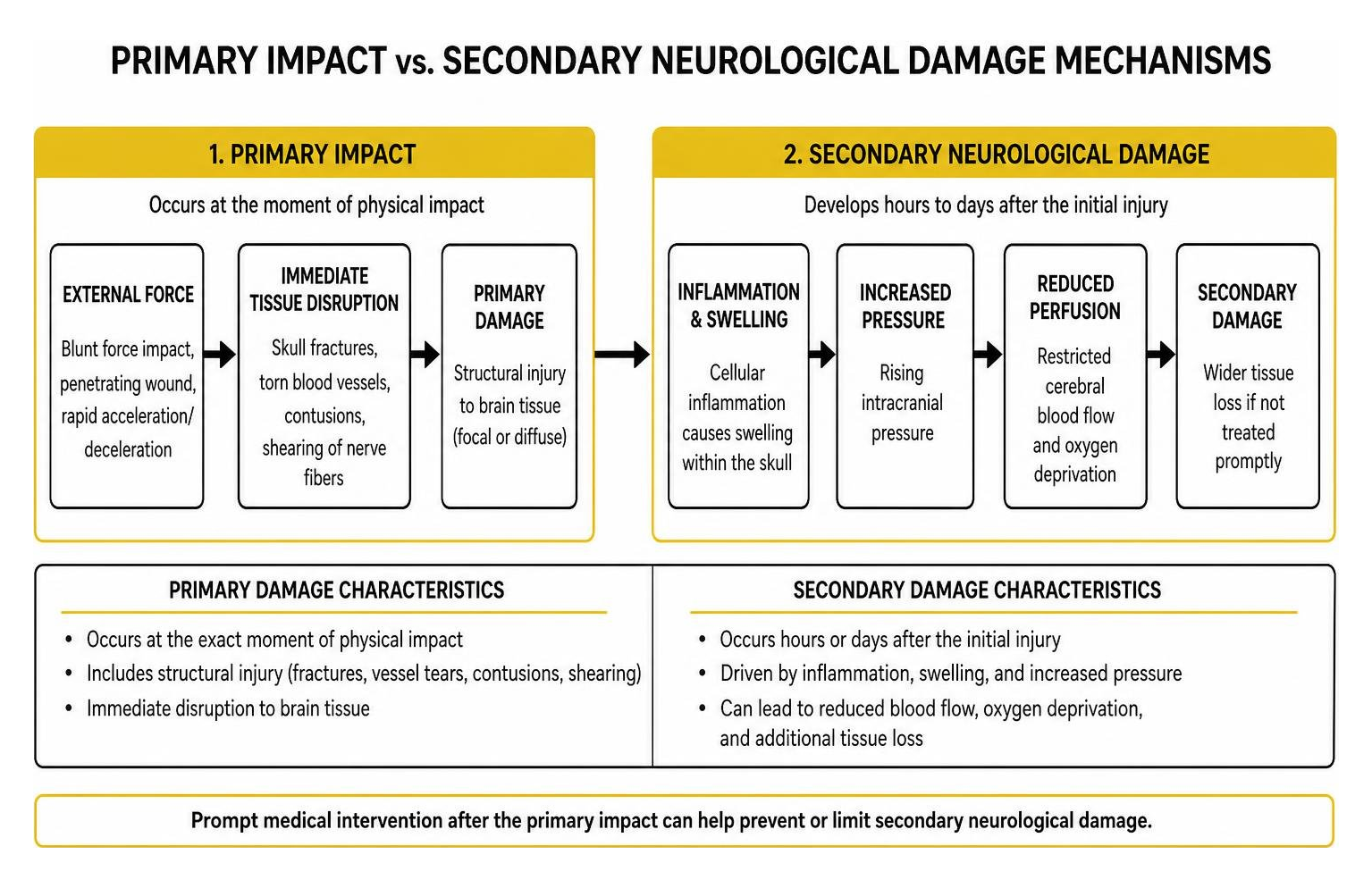
Brain trauma often involves two distinct phases: primary and secondary damage. Primary damage happens at the exact moment of physical impact. It includes structural problems like skull fractures, torn blood vessels, contusions, and shearing of delicate nerve fibers. Secondary damage develops hours or days later. As cellular inflammation escalates, swelling within the rigid confines of the skull causes rising intracranial pressure. This secondary cascade can restrict cerebral blood flow, deprive brain cells of oxygen, and cause wider tissue loss if not treated promptly.
Traumatic Brain Injury vs. Acquired Brain Injury
The key difference between a traumatic brain injury and an acquired brain injury comes down to the source of the harm. A TBI requires an external physical force applied directly or indirectly to the head. This can happen through direct blunt force, a penetrating object, or violent rotational acceleration that causes the brain to twist within the skull.
In contrast, an acquired brain injury happens at the cellular level from internal biological events or oxygen deprivation rather than an outside mechanical blow. Anoxic and hypoxic events occur when the brain is entirely or partially cut off from oxygen, such as during surgical errors, respiratory failure, or toxic gas inhalation. Conditions like toxic encephalopathy, metabolic disorders, and strokes also fall under ABIs.
Both categories can lead to serious cognitive, emotional, and physical impairments. In personal injury claims, identifying the exact mechanism helps prove liability, establish medical causation, and secure compensation for your recovery.
Recognizing Critical Symptoms and Severity Levels
Diagnosing the severity of a brain injury begins in emergency rooms using diagnostic tools like the Glasgow Coma Scale (GCS). The GCS evaluates motor responses, verbal output, and eye-opening capabilities to assign an initial severity score between 3 and 15:
- Mild TBI (GCS 13–15): Often called a concussion, this level involves brief disorientation, confusion, or a loss of consciousness lasting less than 30 minutes. While labeled “mild,” long-term post-concussion syndrome can still cause lasting cognitive problems.
- Moderate TBI (GCS 9–12): Marked by loss of consciousness lasting up to 24 hours, post-traumatic amnesia, noticeable neurological deficits, and clear abnormalities on medical scans.
- Severe TBI (GCS 3–8): Represents prolonged unconsciousness, coma, extensive structural damage, and high risks of long-term physical, behavioral, and cognitive disability.
Head trauma can lead to several specific neurological conditions, including localized contusions (brain bruising), hematomas (epidural, subdural, or intracerebral blood clots), and diffuse axonal injuries (shearing of microscopic nerve pathways from violent rotational forces).
Recognizing symptoms early can save lives. If you or a loved one experience any of these warning signs after an accident, seek emergency medical care immediately:
- Cognitive Indicators: Persistent confusion, memory gaps, slowed processing, trouble finding words, or difficulty concentrating.
- Physical Symptoms: Worsening headaches, repeated nausea or vomiting, dizziness, light or sound sensitivity, blurred vision, or clear fluid draining from the nose or ears.
- Behavioral & Emotional Shifts: Sudden mood swings, uncharacteristic aggression, deep depression, severe anxiety, or altered sleep cycles.
- Critical Red Flags: Unequal pupil sizes, slurred speech, limb weakness, severe numbness, uncoordinated movements, sudden seizures, or difficulty waking up.
Common Causes of Traumatic Brain Injuries in Lea County
Across Lea County and the wider Permian Basin, daily activity brings unique hazards. The combination of heavy industrial operations and busy transit corridors leads to high rates of severe physical trauma. Understanding the common causes of head injuries in our region is essential when seeking Hobbs legal services to hold negligent parties accountable.
Oilfield Incidents and Industrial Hazards
The energy industry drives Lea County’s economy, but working on extraction sites involves serious hazards. The heavy machinery, high pressure systems, and elevated work platforms of the Permian Basin can lead to life-altering accidents. Catastrophic head injuries in oilfield environments frequently stem from:
- Falls From Heights: Falls from derrick boards, drilling rig substructures, catwalks, and slick access ladders without adequate fall protection systems.
- Struck-By Incidents: Being struck by pressurized line blowouts, swinging crane loads, dropped tongs, or failing iron roughneck equipment.
- Explosions and High-Pressure Releases: Blast waves from tank battery explosions or catastrophic wellhead pressure releases that cause concussive head injuries.
When an oilfield accident causes a severe head injury, establishing liability often goes beyond simple workers’ compensation. Oil extraction operations rely on complex networks of operators, leaseholders, drilling contractors, trucking outfits, and equipment manufacturers.
If third-party contractors commit safety violations or provide defective machinery, victims can pursue third-party liability claims. Our team works alongside experienced Hobbs oil-field accident lawyers to investigate safety logs, maintenance records, and regulatory violations. When facing complex corporate structures, working with a team experienced in oilfield injury claims is critical to identifying every liable party.
Motor Vehicle and Commercial Truck Collisions
Lea County’s transportation routes, including Highway 18, US-62, NM-128, and Lovington Highway, carry heavy volumes of commercial transport and industrial traffic. The constant mix of heavy commercial tankers, sand haulers, oversized equipment haulers, and passenger vehicles creates substantial risks for severe motor vehicle crashes.
High-speed collisions generate violent mechanical forces. When a passenger vehicle is struck by an 80,000-pound commercial vehicle, the resulting impact forces the human skull through rapid acceleration, deceleration, and violent rotation. Even if your head does not directly strike the steering wheel or window, your brain can impact the interior walls of the skull, causing diffuse axonal shearing, contusions, and subdural bleeding.
Pursuing commercial truck crash claims requires uncovering crucial evidence, including electronic control module (ECM) data, driver logbooks, and corporate fleet maintenance records.
When to Consult a Hobbs Brain Injury Lawyer
Navigating the aftermath of a traumatic brain injury can feel overwhelming. Dealing with medical visits, rehabilitation, and sudden financial pressure is difficult enough without managing complex insurance paperwork. Knowing when to involve legal counsel is a critical step toward protecting your future.
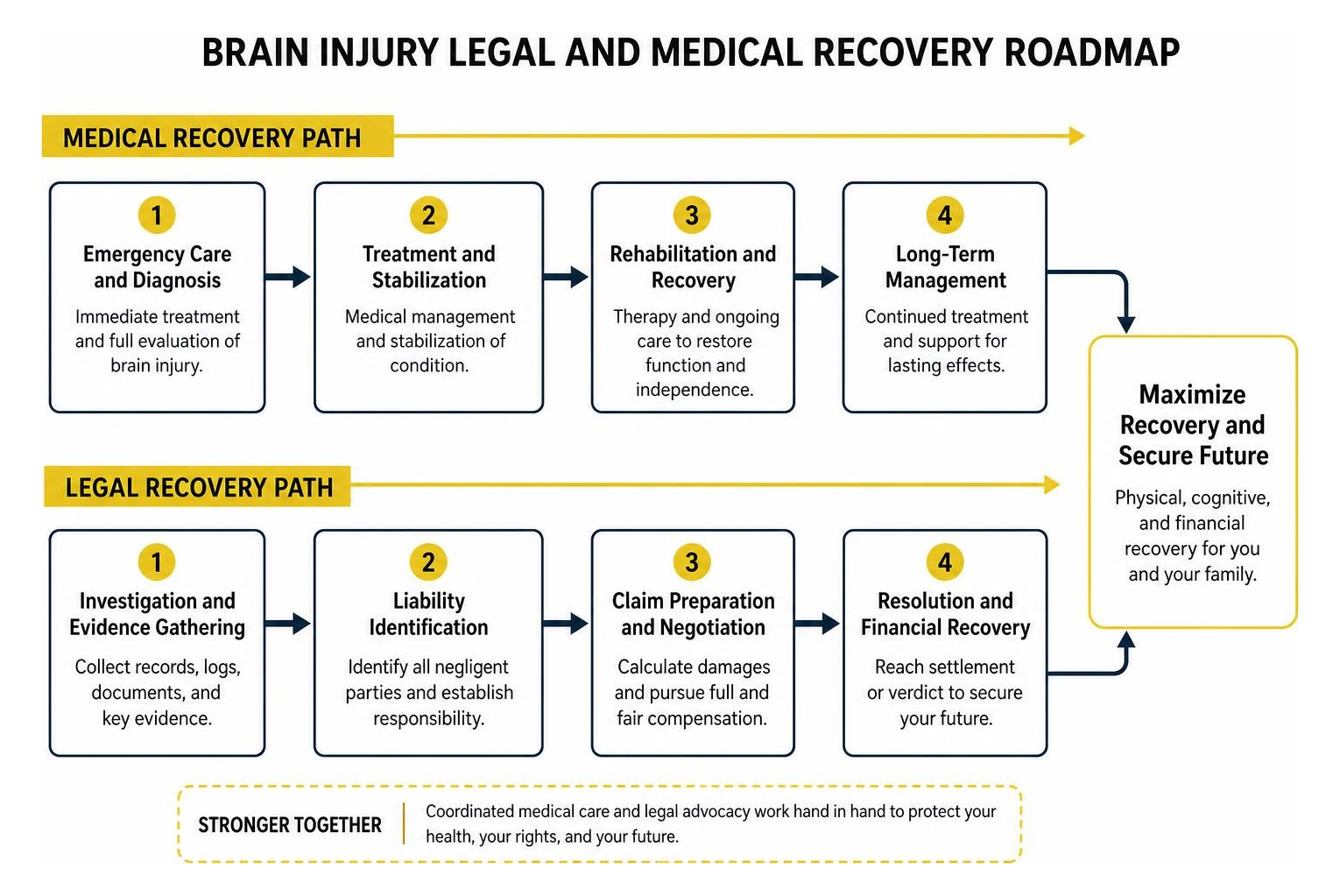
If your injury resulted from an oilfield incident, a motor vehicle crash, or an unsafe property, you should consult an attorney as soon as your medical condition stabilizes. Insurance carriers often deploy adjusters quickly to minimize financial payouts.
Securing representation from a dedicated Hobbs catastrophic injury lawyer can help protect your legal rights, preserve critical evidence, and shield your family from bad-faith settlement tactics while you focus on recovery.
Why You Should Partner with a Hobbs Brain Injury Lawyer Early
Getting an attorney involved right away provides important strategic advantages for your case:
- Evidence Preservation: Worksite environments change rapidly, skid marks fade, digital surveillance footage gets overwritten, and commercial trucking data can be lost if a formal legal spoliation notice is not served promptly.
- Independent Investigation: A dedicated legal team coordinates accident reconstructionists, industrial safety personnel, and forensic investigators to identify all liable parties.
- Comprehensive Damage Assessment: Experienced attorneys work with neurologists, neuropsychologists, and life care planners to document the full scope of your current and future care needs.
- Managing Insurance Communications: Your lawyers can handle communications with insurance adjusters, helping you avoid inadvertent statements that insurers could use to undervalue your claim.
- Contingency-Fee Representation: Contingency arrangements can make legal representation more accessible. You pay no upfront retainers or out-of-pocket legal fees unless your legal team secures a financial recovery for you.
The Pitfalls of Accepting an Early Insurance Settlement
Insurance carriers are for-profit corporations focused on protecting their bottom line. Following a major accident in Hobbs, claims adjusters may reach out to offer a quick settlement. While an immediate check might seem helpful when medical bills arrive, accepting an early offer is rarely in your best interest.
Traumatic brain injuries are medically complex. Mild to moderate TBIs often present subtle, latent symptoms like executive function deficits, memory loss, and emotional changes that can take months to fully emerge. Once you sign a release waiver, you permanently give up your right to pursue additional compensation, leaving you personally responsible for any future medical costs.
Proving Negligence and Valuing Brain Injury Claims in New Mexico
To secure fair compensation in a New Mexico personal injury lawsuit, you must prove the four key elements of negligence: duty of care, breach of duty, causation, and actual damages.

Proving that a defendant’s negligence directly caused a traumatic brain injury requires clear medical evidence, testimony from field professionals, and accident reconstruction. In tragic cases where severe head injuries prove fatal, surviving family members can seek accountability through wrongful death actions.
Essential Evidence and Proving Liability Under Comparative Fault
Building a strong brain injury claim requires collecting several key forms of evidence:
- Advanced Neuroimaging: Objective diagnostic records, such as high-resolution 3-Tesla (3T) MRIs, diffusion tensor imaging (DTI) showing white matter tract damage, and CT scans showing internal bleeding or skull fractures.
- Neuropsychological Evaluations: Formal testing documenting measurable deficits in executive functioning, memory recall, information processing speeds, and motor skills.
- Physical and Digital Site Evidence: Black box data from commercial trucks, dashcam recordings, workplace video surveillance, physical equipment inspections, and OSHA safety citations.
- Eyewitness and Deposition Testimony: Sworn statements from eyewitnesses, supervisors, coworkers, and family members detailing the incident and your daily cognitive changes.
New Mexico applies a pure comparative fault legal standard (N.M. Stat. Ann. § 41-3A-1). Under this rule, an injured person can recover compensation even if they were partially at fault for the accident. However, your total recovery is reduced in direct proportion to your share of responsibility.
For instance, if a jury awards $2,000,000 in total damages but finds you 15% at fault for the accident, your final payout would be $1,700,000. Insurance defense lawyers often try to shift blame to injured victims to minimize their payouts, making detailed evidence collection essential.
Calculating Long-Term Care, Lost Earning Capacity, and Damages
The long-term costs of a moderate to severe traumatic brain injury can be substantial. Fairly evaluating a claim requires assessing both economic and non-economic damages across your lifetime:
- Past and Future Medical Expenses: Covers emergency trauma stabilization, neurosurgery, inpatient rehabilitation, prescription medications, targeted physical therapy, and speech-language therapy.
- Long-Term Care and Attendant Services: Covers home health aides, full-time nursing care, adaptive medical equipment, and necessary home modifications for severe, permanent disabilities.
- Lost Earning Capacity: Uses vocational and economic calculations to account for lost wages, bonuses, benefits, and reduced lifetime earning potential.
- Non-Economic Damages: Provides compensation for physical pain, emotional distress, loss of independence, and reduced quality of life.
- Punitive Damages: In rare cases involving gross negligence or willful misconduct, New Mexico courts may award punitive damages to punish wrongdoers and deter future bad behavior.
Frequently Asked Questions About Brain Injury Claims in Hobbs
How does a Hobbs brain injury lawyer handle complex cases like diffuse axonal or birth injuries?
Handling complex neurological cases like diffuse axonal injuries (DAI), pediatric trauma, or birth-related hypoxic-ischemic encephalopathy requires in-depth litigation experience. Diffuse axonal injuries often show clear cognitive symptoms despite normal standard CT scans. We use advanced neuroimaging, including 3T MRI and Diffusion Tensor Imaging (DTI), to highlight damaged neural tracts.
In birth injury cases, our attorneys examine fetal monitoring strips, labor delivery logs, and neonatal resuscitation procedures to identify medical negligence. We work with leading medical professionals and life care planners to help document and account for the child’s lifelong developmental, educational, and medical needs.
What is the statute of limitations for filing a TBI claim in New Mexico?
Under New Mexico law (N.M. Stat. Ann. § 37-1-8), you generally have three years from the date of the injury to file a personal injury lawsuit. Missing this deadline will almost always permanently bar you from seeking compensation in court.
Important exceptions can significantly shorten or alter this timeframe:
- Claims Against Government Entities: Under the New Mexico Tort Claims Act, you must file a formal Notice of Claim within 90 days (or six months for wrongful death claims) if your injury involved a government employee, vehicle, or public roadway.
- Minors: When a child sustains a brain injury, the statutory clock is generally paused until their 18th birthday, though acting early helps preserve critical evidence and witness memories.
Can I recover compensation if I was partially at fault for the accident?
Yes. Because New Mexico follows a pure comparative negligence system, you can recover damages even if you share some responsibility for the incident. Your final financial award is reduced proportionally by your percentage of fault.
For example, if you were 25% responsible and your total damages equal $1,000,000, you can still collect $750,000. Insurance companies often try to exaggerate an injured person’s fault to reduce their own liability, which is why having an experienced legal team investigate your accident is so important.
Conclusion
A traumatic brain injury can change your life and your family’s future in an instant. Managing ongoing medical treatments, physical therapy, and daily cognitive challenges is difficult enough without also dealing with insurance adjusters. You do not have to go through the recovery process alone.
At Nix Patterson, LLP, we use our national resources, advanced trial technology, and dedicated legal team to help injured individuals and families across Hobbs and Lea County. We investigate accident scenes, challenge low insurance offers, and present clear medical evidence to pursue the full financial compensation you need to rebuild your life.
If you or a family member suffered a head injury from an oilfield incident, commercial truck collision, or other serious accident, contact our team today. Reach out to a dedicated Hobbs catastrophic injury lawyer to schedule a free, confidential case consultation.